Introduction
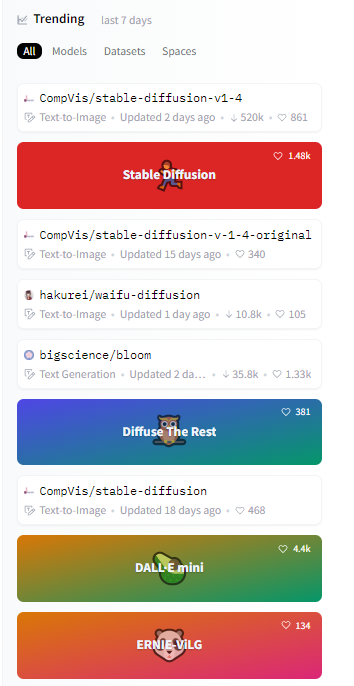
If you work in the field of deep learning, you are likely not unfamiliar with the recently popular Diffusion models. On the popular machine learning model hosting website Hugging Face, the top entries in the Trending section are, without exception, all diffusion models.
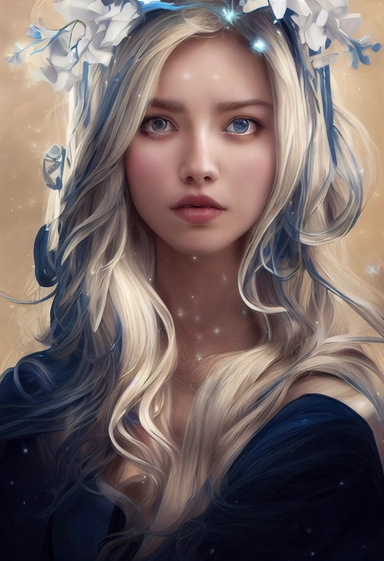
The images generated by these diffusion models are equally stunning. Whether landscapes, portraits, or paintings in various styles, the generated images exhibit extremely high quality. Here are a few examples generated by these models.
Image source: Midjourney Hanzo Image source: Midjourney LiaLöwenherz🦁💙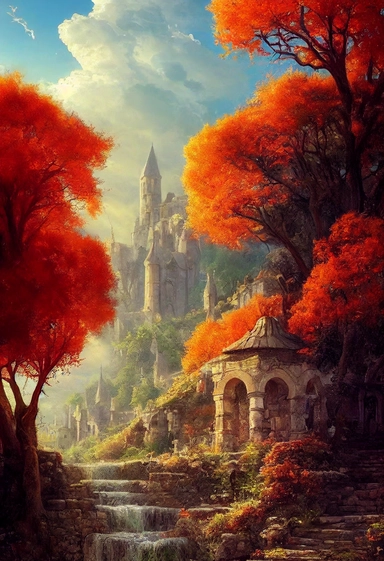
Of course, many large and small enterprises have already begun utilizing diffusion models for commercial operations. For example, abroad:
Domestically:
Some have even used AI to create images celebrating the LOL championship victory 1, and even People’s Daily released a Mid-Autumn Festival video2 generated using diffusion models on Bilibili, proving it has truly gone viral.
Recently, while taking a course on Dialectics of Nature, I wanted to reflect on this issue, which led to this article. For a brief history, principles, and performance comparison of diffusion models, please refer to my other article3.
The Question Raised
Given how stunning these models perform, might one day we no longer need artists to create art?
Will the work of artists be replaced by such generative art? In 5 years? 10 years? 20 years? 100 years? What will future art and artists look like?
The Rapid Development of AI
The history of AI dates back a long way. Here, I will briefly outline the significant advancements in the AI field, particularly deep learning, in recent years, along with several milestones:
- 2012: The AlexNet model surpassed humans on the ImageNet image classification task.
- 2016: AlphaGo, in a field humans never believed a machine could defeat them—Go—soundly defeated world Go champion Lee Sedol.
- 2018: StyleGAN generated human faces indistinguishable from real ones to the human eye.
- 2021: OpenAI’s GPT-3, a large language generation model based on context, capable of generating various types of text, even code. It is said to have cost OpenAI $4.6 million to train 4.
- 2021: DeepMind’s AlphaFold 2, a protein structure prediction model with high accuracy for unknown proteins, aiding drug development.
- 2022: Stable Diffusion (aka DALL·E 2), high-quality text-to-image generation.
AI has already defeated humans in many fields and is beginning to assume a position of dominance.
This CLIP + Diffusion model has also shattered many preconceived notions. Just as AlphaGo’s arrival did, before which people believed no model could defeat humans in a complex field like Go, the result is now well known: AlphaGo defeated world Go champion Lee Sedol 3-1. Since then, no one has been able to defeat AI in the field of Go.
After AlphaGo defeated Lee Sedol, Ke Jie once complained during a live stream that AI has made Go very ‘boring’ 5. Now, it’s not about how skilled you are, but how much you understand AI, how similar you can become to AI, and learning to play Go like AI. Yet, it cannot be denied that AI has also led to tremendous progress for humans in the field of Go.
This Diffusion model brings a shock similar to what AlphaGo did. Previously, many believed deep learning models would lack creativity, merely inducting and deducing existing knowledge, unable to create something never seen before (including myself). However, here, it not only understands descriptions in strange languages, no matter how fantastical, and generates reasonable images that fit the description, but it can also generate things never seen or events impossible in the human worldview, and even create things with great creativity and imagination.
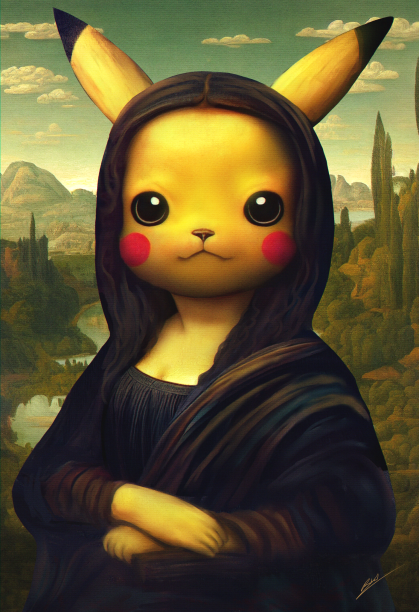
Image source: Midjourney Discord community BartonDH 6. This image was even taken to OpenSea to be sold as an NFT, eventually getting reported and taken down, highlighting that copyright issues in the NFT market remain extremely difficult to resolve.
Which Jobs Will Be Replaced
From ancient times to the present, machines replacing manual labor to improve production efficiency is inevitable.
In January 2019, scholars Baobao Zhang and Allan Dafoe from the Center for the Governance of AI at the Oxford University Future of Humanity Institute released an 111-page report titled “Artificial Intelligence: American Attitudes and Trends” 7 8, which mentioned the risk of AI replacing certain repetitive jobs. In 2013, Frey et al.’s “The future of employment: How susceptible are jobs to computerisation?” 9 listed over 700 occupations and their probabilities of being replaced, noting that 47% of jobs in the United States faced a high risk of replacement, including telemarketers, title screeners, textile workers, and so on. Most of these are highly repetitive jobs; for instance, telemarketing largely involves making repetitive calls using nearly identical scripts. Nowadays, many of the nuisance calls we receive are no longer made by humans. In contrast, they considered creative professions such as artists and scientists to have a lower probability of being replaced.
Of course, this article is from 2013, and many of its viewpoints are now somewhat outdated; professions previously deemed to have an extremely low risk of replacement now face significant risks. For example, the field of AI in Science has recently become extremely popular. Take the December 2021 article on the cover of Nature, “Advancing mathematics by guiding human intuition with AI” 10, which used AI to guide the proof of mathematical formulas. Although this does not mean AI can already replace mathematicians, it has begun guiding the mathematical intuition of scientists and mathematicians, possessing a certain level of mathematical literacy, and helping mathematicians gain inspiration for proving theorems. In the future, using AI to guide intuition and improve research efficiency is certainly not a pipe dream.
How far can AI go? What problems arise?
So, returning to art, the core logic of current diffusion models remains largely unchanged: they can generate a complete image from random noise or an initial value.
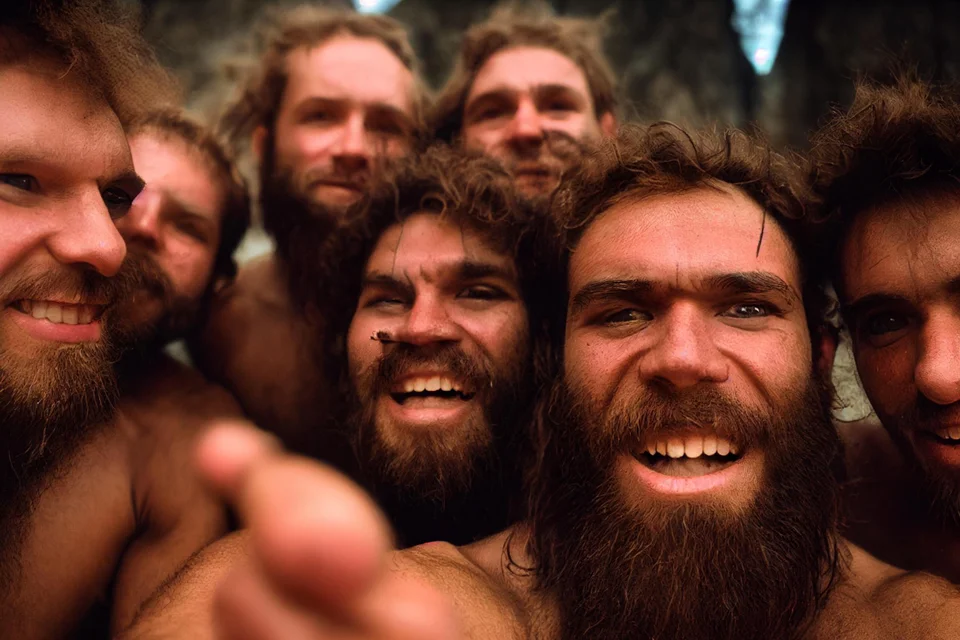
Cavemen taking a group selfie
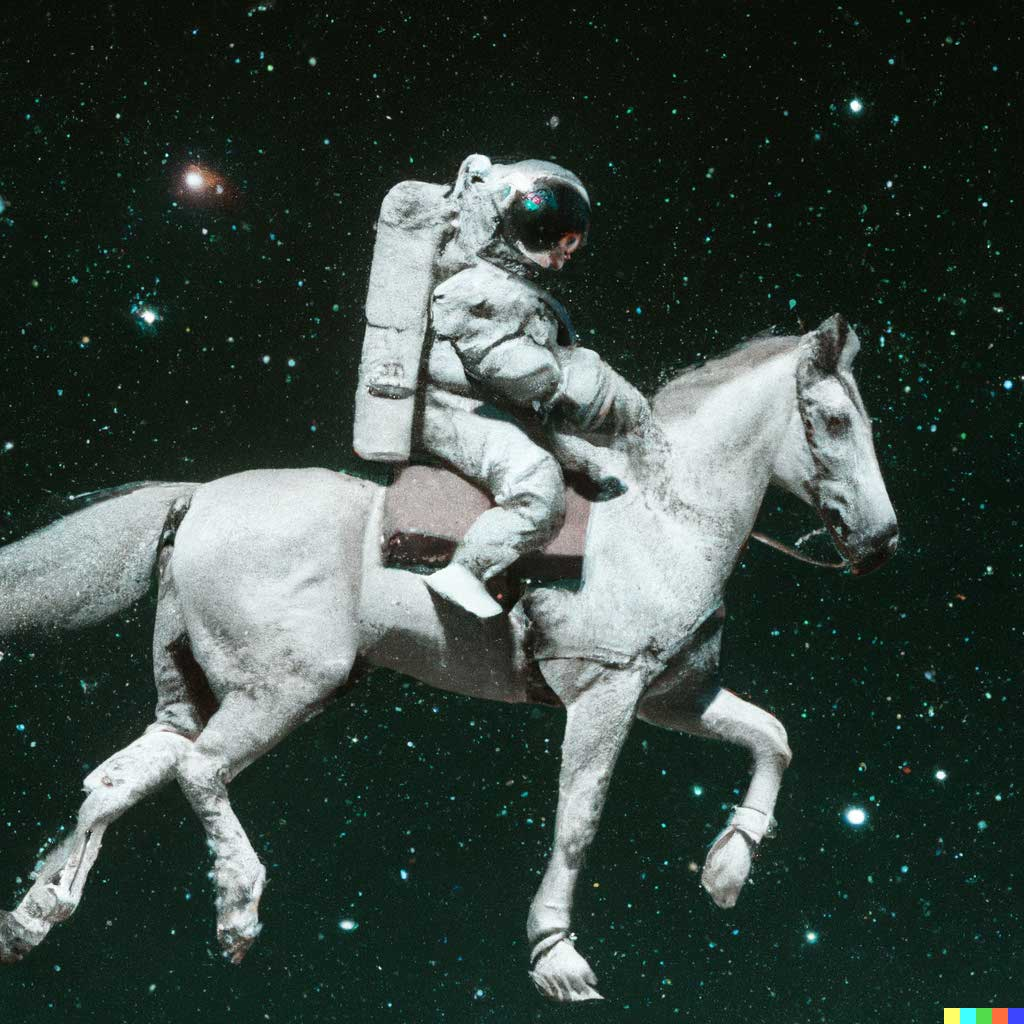
An astronaut, riding a horse, in a photorealistic style
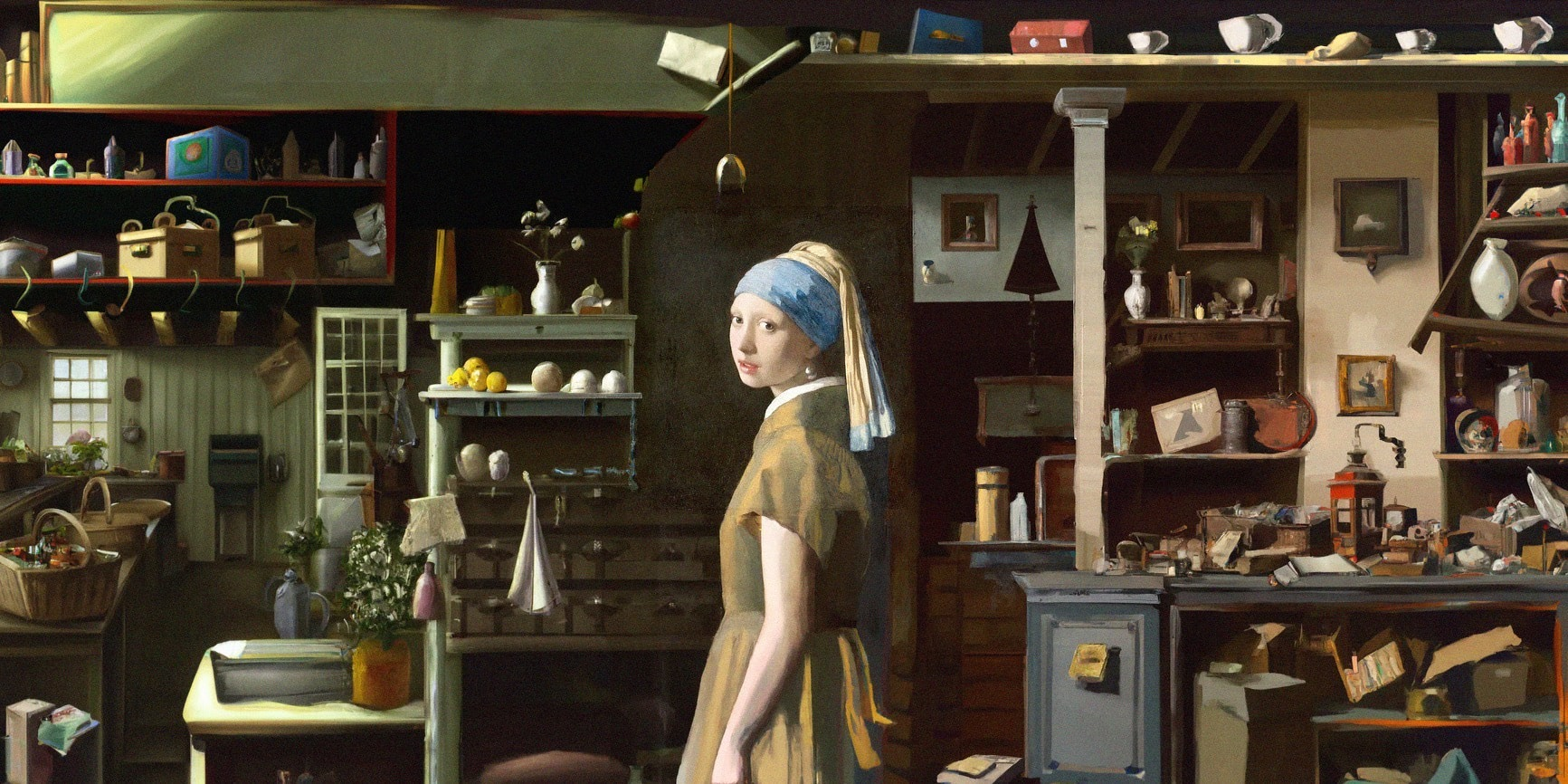
And beyond generation 11 12, there are already numerous painting skills, such as image inpainting, image super-resolution, and editing images based on text descriptions.
This is a completion of “Girl with a Pearl Earring” by OpenAI’s Dall·E 13.
Super-resolution from the Imagen paper 14.
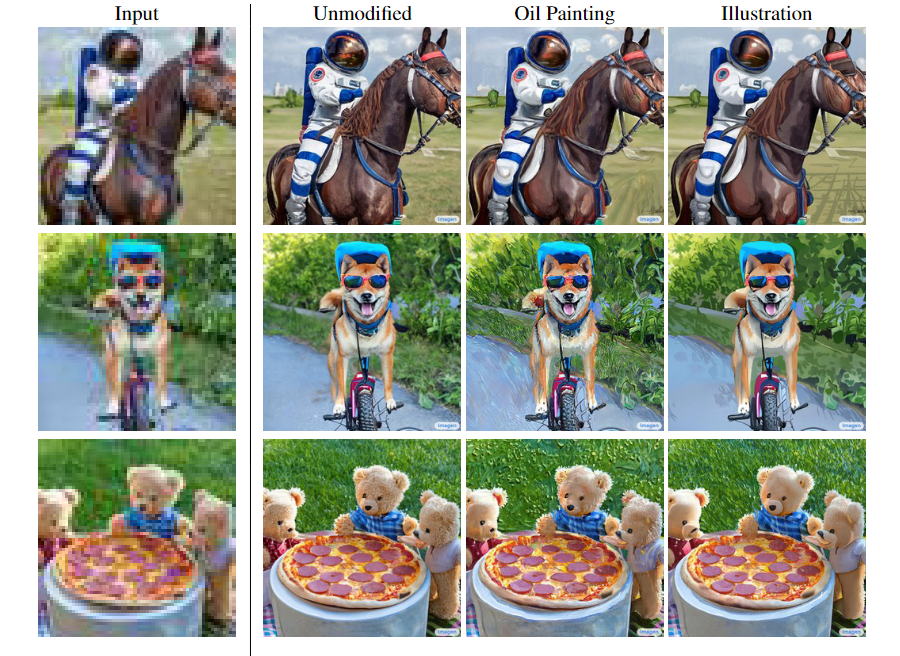
Image editing by Dall·E-2 12.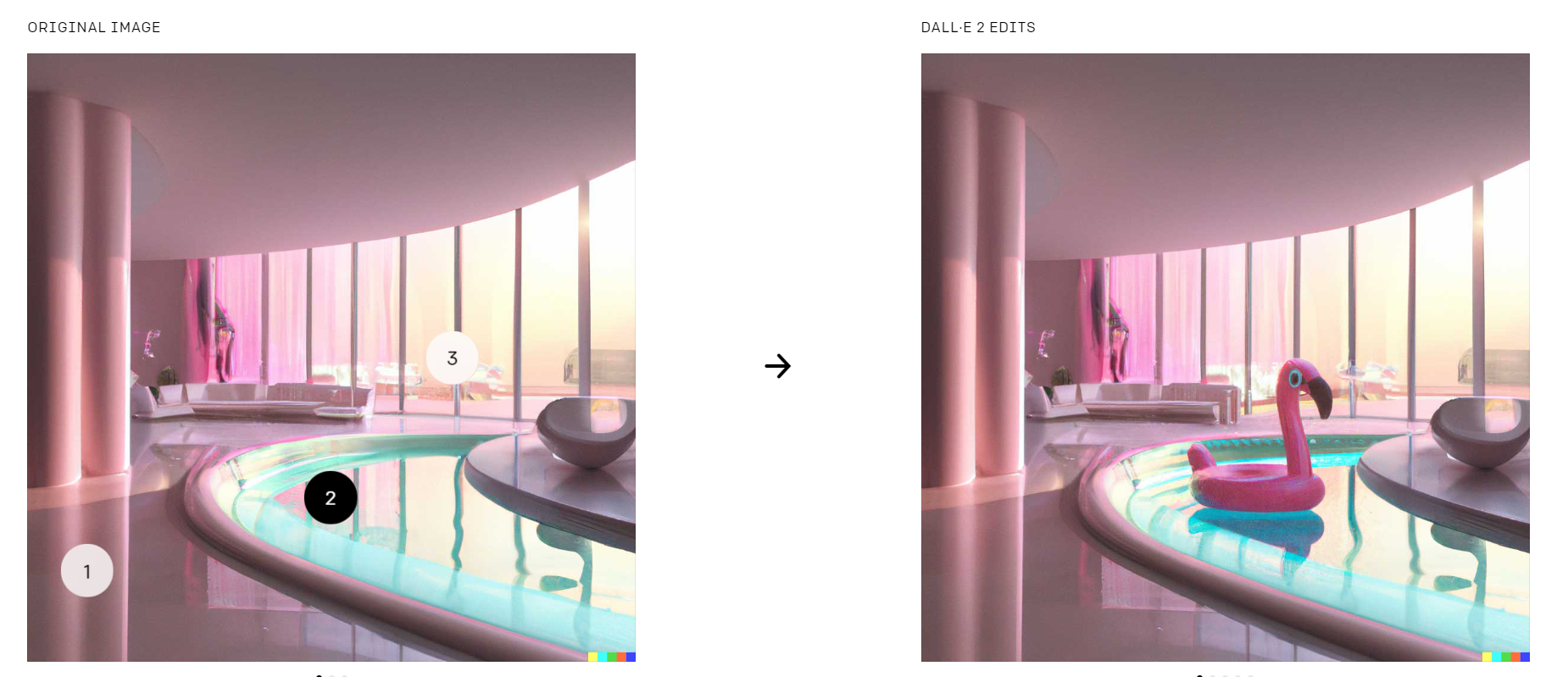
The fact that AI can reach this level carries certain risks. After all, AI can understand the meanings of specific terminology because its training data mostly comes from internet images rather than fixed datasets. This brings up many copyright issues (beyond copyright, there are also rights of portrait, rights related to characters, and various other ownership rights), sparking significant online debate and leading to resistance against AI-generated art by many illustrators 15 16.
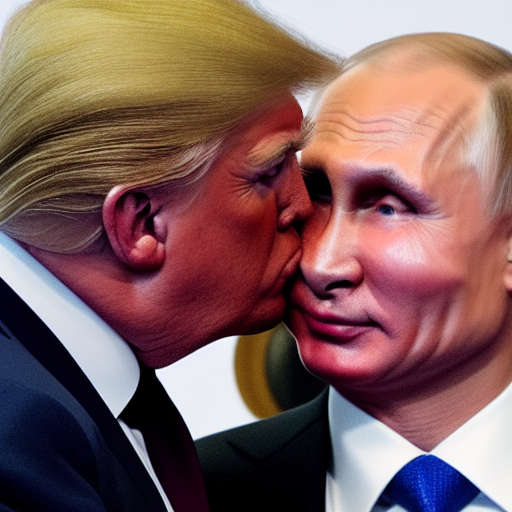
Generated by Stable Diffusion, prompt: trump kiss putin
Many illustrators or concept artists’ livelihoods depend on their unique artistic styles. However, a very realistic and easy thing is that after an artist spends years designing an elegant and refined style, AI can glance at it, train on the data, and effortlessly generate a pile of works in the same style within seconds. Is this creative efficiency somewhat unbalanced? It is only natural and understandable that artists would resist this 17. After all, such products are ultimately intended for commercial operation, while artists’ works are released on the internet for free and absorbed and learned by AI, which is clearly unfair to the artists.
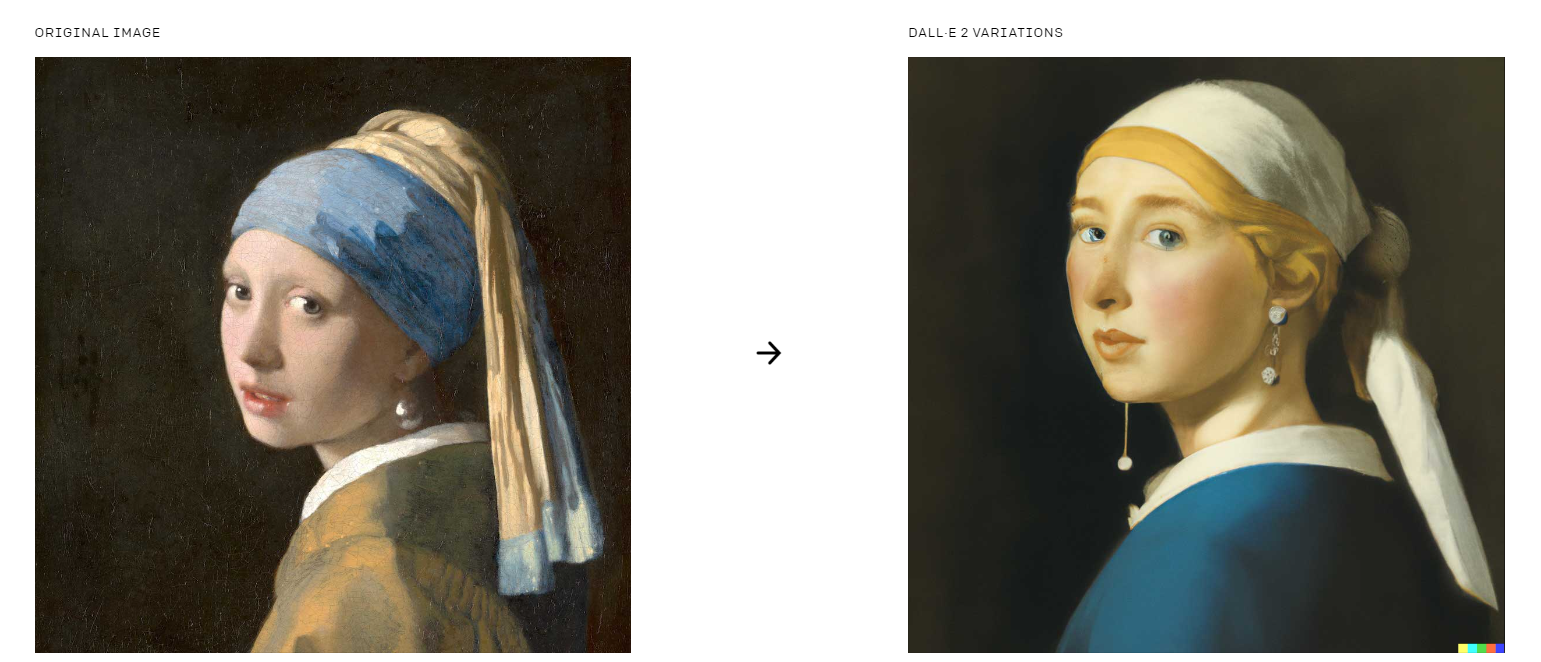
DALL·E 2 VARIATIONS of The Girl with a Pearl Earring
However, this is not up to the artists to decide; existing laws cannot prohibit such creation. After all, imitating a style does not count as plagiarism or infringement. At least under current Chinese law, there are no provisions protecting rights in this area. This also shows that “ethical construction lags far behind the pace of technological development.” Based on existing legal cases in China, there are two aspects: one is the affirmation of copyright for AI-generated works, and the other is the definition of “originality.”
The law recognizes and protects the copyright of AI-created works 18, affirming the work involved in AI model training and prompt tuning (often referred to as “alchemy”). In the process of AI generating artwork, it only uses data for training and incorporates certain elements of the original works into the final product, which meets the criteria of “originality,” just as humans inevitably produce works with similar styles after observing other pieces 19.
Regarding international recognition of AI originality, a very typical example occurred recently. In August 2022, at an art fair in Colorado, USA, “Théâtre D’opéra Spatial” won the champion in the digital art category 20.
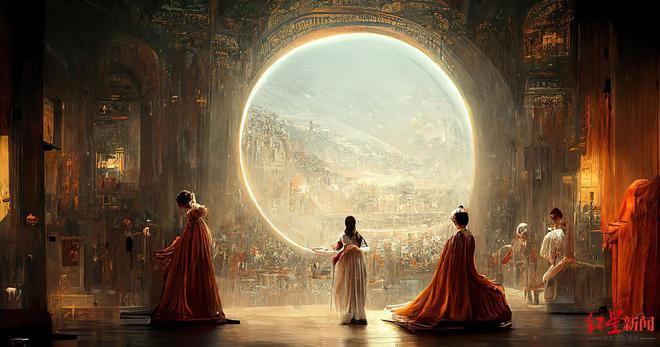
《Théâtre D’opéra Spatial》 by Jason Allen via Midjourney
AI will undoubtedly bring massive disruption to the field of painting, and it’s not just about that; there will also be significant impacts on the anime and film/TV industries. Although currently generating highly continuous video is not yet possible, methods like interpolation and frame filling exist. As research deepens, AI-generated video will be realized very soon. There are already demos of AI performing video editing 21 and AR 22.
Another point is the risk of other elements appearing in AI-generated images, such as pornography, gore, violence, etc. For example, Reddit has already banned many NSFW posts 23.
“Creator” + Technical Skill = “Artist”
So, while AI-generated images currently carry some risks, this is a rapidly iterating field, and these risks will gradually be mitigated in future developments. But it cannot be denied that many AI-generated images are already imaginative and creative. So, perhaps we truly no longer need “artists”?
Let’s return to the most fundamental question: what is an artist, 将其所体验的世界通过各艺术种类的独特艺术语言和表现手段转化成艺术作品的人 is called an artist 24. In this process, as AI develops, art forms, artistic languages, and expressive techniques will inevitably occupy every domain of art, such as music, watercolor, oil painting, sketching, and so on. But what is most crucial is the ideas that artists derive from their experiences of the world. Regardless of the form, the form itself is merely one of the artist’s expressive techniques.
Therefore, I believe that “creators” may eventually replace the status of “artists,” diminishing the emphasis on artistic skills while focusing on content expression.
In the short term, artists can use AI as a tool to quickly generate initial works for iterative upgrades and refinement 25. However, in the medium to long term, it is inevitable that AI will replace artists’ work. It allows people without technical skills to express their thoughts and viewpoints through various forms, enabling more people to participate in artistic creation.
Currently, on Bilibili, there are already “creators” who use AI to generate images and videos for profit 26. At the same time, many derivative professions have emerged: for example, teaching prompt engineering, selling high-quality image prompts, etc. There are also prompt search websites like openart and prompthero , truly giving rise to the role of “prompt engineers”.
Conclusion
Although AI cannot yet completely replace all of an “artist’s” work, it can already serve as a tool to provide more people with avenues for artistic expression, greatly enhancing the productivity of “creators.” In the near future, diffusion models will certainly offer more detailed optimizations, such as lighting, perspective, etc., to enable finer scene control. At that time, everyone can become a “creator,” displaying their inspiration to the public at any moment.
Of course, at the same time, we should also focus on protecting artists’ copyrights and ideas. We can leverage technologies and methods like NFTs and Web 3.0 to improve relevant laws and regulations, safeguarding artists’ original works.
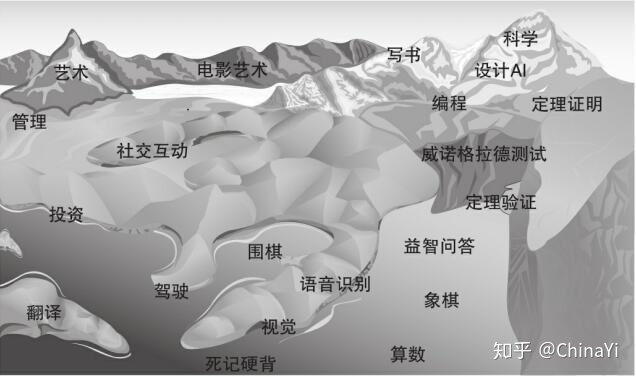
However, in the distant future, if AI truly develops to the point where it possesses its own emotions and coexists with humans, it will certainly be able to replace all of an “artist’s” work. Then the singularity of artificial intelligence will have arrived 27. We can see that art and science are two great peaks; if AI conquers art, then ultimately surpassing humanity is not far off. Right now, we cannot deduce whether this will be a blessing or a disaster.
Reference
https://lol.qq.com/news/detail.shtml?type=6&docid=4934556576507716833 ↩︎
https://discord.com/channels/662267976984297473/1008049088324972657/1015362328906182748 ↩︎
https://isps.yale.edu/sites/default/files/files/Zhang_us_public_opinion_report_jan_2019.pdf ↩︎
https://ora.ox.ac.uk/objects/uuid:4ed9f1bd-27e9-4e30-997e-5fc8405b0491/download_file?safe_filename=future-of-employment.pdf&file_format=application%2Fpdf&type_of_work=journal+article ↩︎
https://www.reddit.com/r/midjourney/comments/wvoscd/cavemen_taking_a_group_selfie/ ↩︎
https://www.zhihu.com/question/550997249/answer/2656595328 ↩︎
https://www.zhihu.com/question/552231525/answer/2665147875 ↩︎
https://baike.baidu.com/item/%E5%A4%AA%E7%A9%BA%E6%AD%8C%E5%89%A7%E9%99%A2/61959625?fr=aladdin ↩︎
https://twitter.com/StrangeNative/status/1569700294673702912 ↩︎
https://baike.baidu.com/item/%E8%89%BA%E6%9C%AF%E5%AE%B6/23418?fr=aladdin ↩︎
https://www.zhihu.com/question/284243786/answer/1131987569 ↩︎